
Disclosure: This post may contain affiliate links. If you purchase through one of our links, we may earn a commission at no additional cost to you.
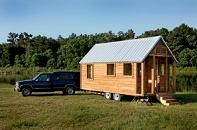
Martin House Company, also known as Lodge on Wheels, builds custom tiny houses on trailers that are wider than the standard 8-foot designs. At 10 feet wide, these homes offer additional interior space but require permits or escorts for highway transport in most states.
Width Comparison
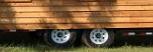
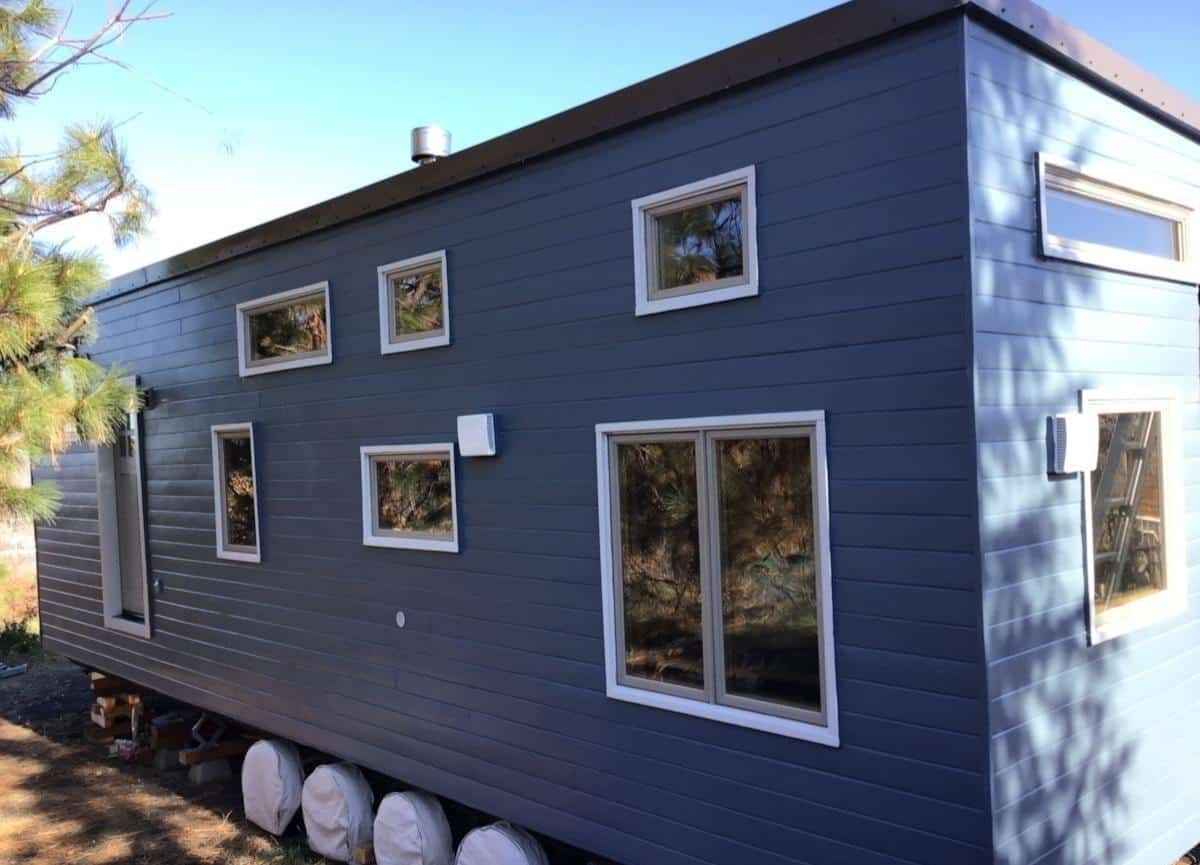
The difference between 8-foot and 10-foot wide tiny houses is visible in the trailer wheel placement. Lodge on Wheels uses wider trailers while companies like Tumbleweed stay within the 8-foot limit for easier transport.
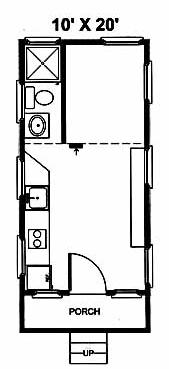
Floor Plan
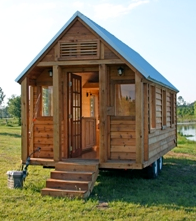
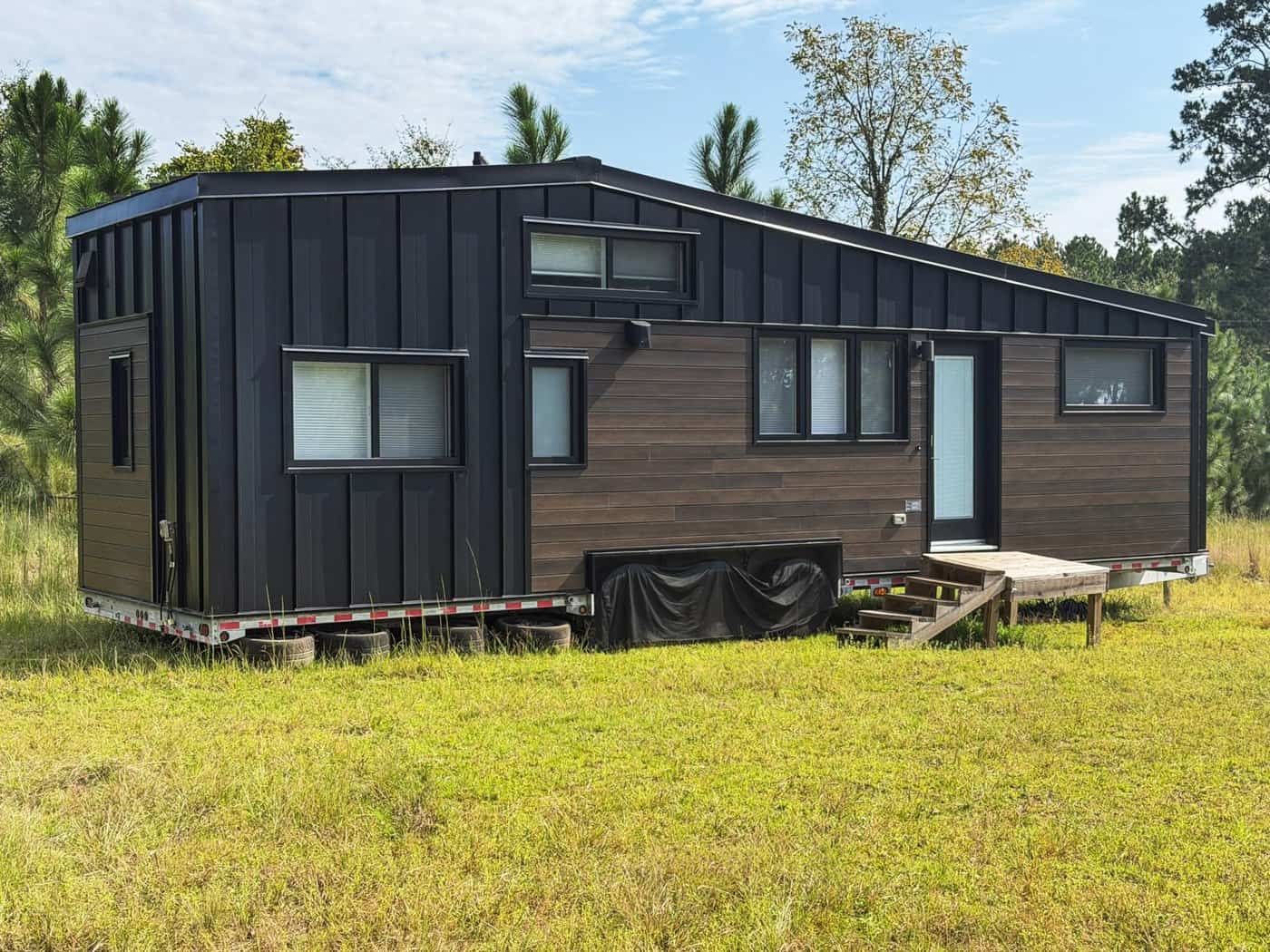
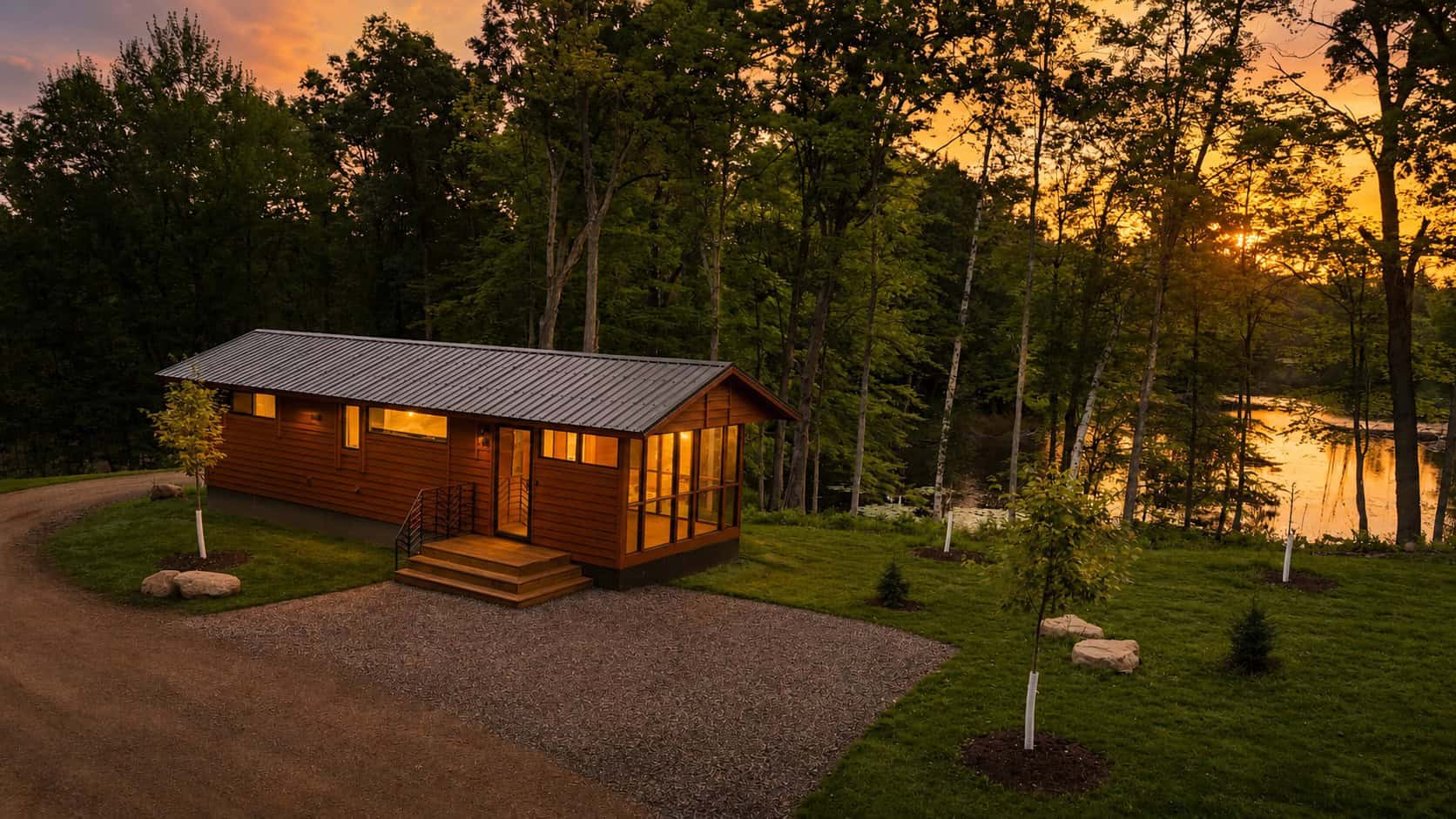
Exterior Views
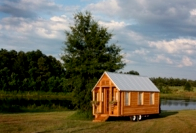
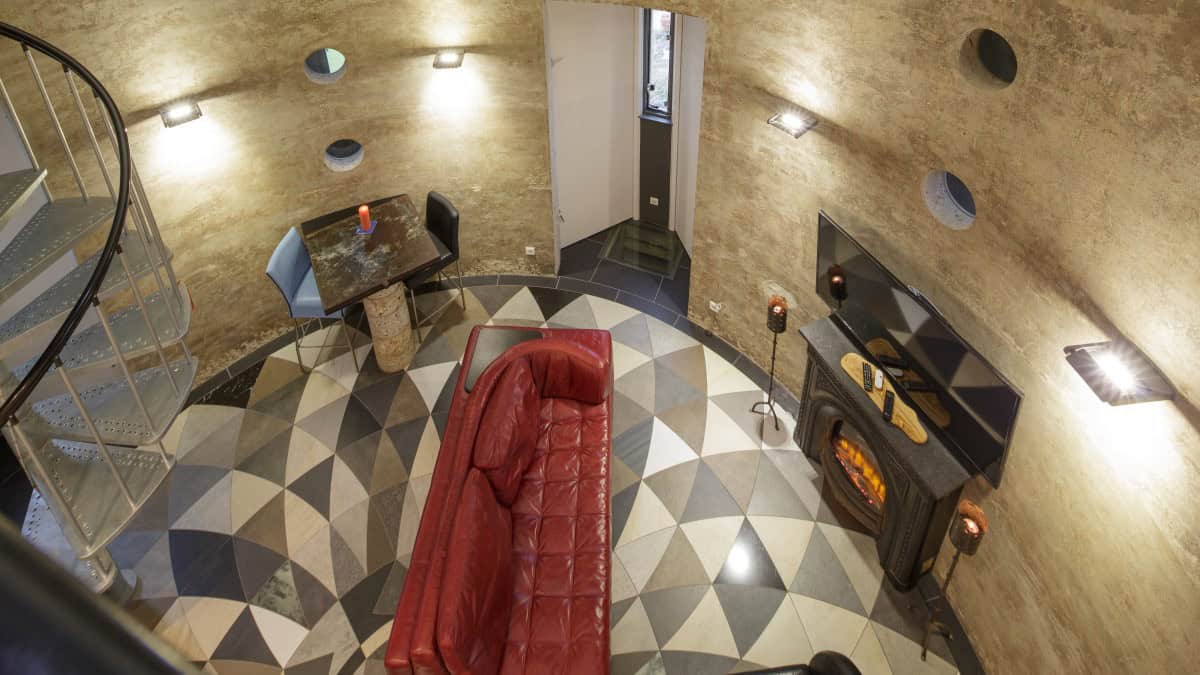
Interior Details
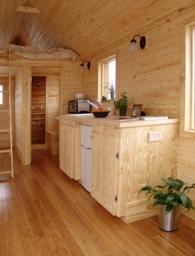
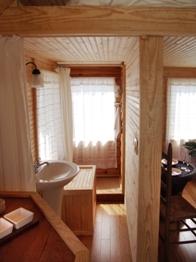

Design Details
- Company: Martin House Company / Lodge on Wheels
- Width Options: 10 feet (standard) or 8 feet (permit-free transport)
- Type: Custom-built tiny houses on trailers
- Build Process: Each order custom built to specifications
- Payment: Half down before construction, half upon completion
The 8-Foot vs. 10-Foot Width Decision
Houses 8 feet wide or less typically require no special permits, escorts, or commercial driver’s license to transport. Wider loads require permits and possibly escort vehicles. For owners who plan to move their tiny house frequently, the 8-foot limit offers convenience. For those settling in one location, the extra 2 feet of width significantly improves interior livability.
Lessons from Wide Tiny House Designs
- Two Extra Feet Makes a Difference: In tiny houses, every inch of width improves the feeling of spaciousness
- Transport Rules Affect Design: Width limits are set by highway regulations, not building codes
- Custom Builds Address Individual Needs: Working directly with builders allows width decisions based on your specific situation
- Consider Your Moving Frequency: How often you’ll relocate should influence the width decision
- Both Options Exist: Good builders offer multiple width options to suit different needs
You can share this using the e-mail and social media re-share buttons below. Thanks!
If you enjoyed this you’ll LOVE our Free Daily Tiny House Newsletter with even more!
Also, try our Tiny Houses For Sale Newsletter!
More Like This: Tiny Houses | Tiny House Builders
See The Latest: Go Back Home to See Our Latest Tiny Houses
Disclosure: This post may contain affiliate links. If you purchase through one of our links, we may earn a commission at no additional cost to you.


Alex
Latest posts by Alex (see all)
- Studio Home Laurel: A One-Bedroom Backyard ADU in Four Architectural Styles - October 10, 2026
- A 6’5″ Man’s DIY Tiny House on Wheels, Permitted in Calgary - October 10, 2026
- A Long House: A Designer’s 603 Sq Ft Seoul Apartment Opened Up Around Morning Rituals - October 10, 2026



Good to have you back Alex.
On pulling a 10 wide building on a trailer, all you need is (minimum) a 3/4 ton truck, a good receiver
hitch, and extended mirrors. The permit (at least in Texas) isn't that big a deal. Also need to up your liability insurance but that can be a one time, short term expense for the move itself. Never lost a trailer or a load myself (conservatism and paranoia are GOOD things) but it CAN happen to anyone. When in doubt, always check with your State's Department of Transportation or check into building movers if your unsure of yourself or don't have a heavy enough pickup.
These tiny houses are TOO good. Do you own one of them, or know anyone who does?
@Joe No I don't own one (I live in a small apartment) and I've yet to see one in Florida.
@ Davidrc thanks for the helpful info!
Where can you legally build these (what states). What are the conditions most areas will force you into. Are wheels vs. no wheels an issue? Is it easier to get a tiny home built with no wheels? How many sq. ft can a tiny home be without having a huge amount of issues building it with the local authorities?
Please respond to me at maryccharest@yahoo.com
Hey Mary you can build these in most states because they're constructed on trailers which in most cases classifies them as RVs. Wheels vs. no wheels can be an issue in many areas because there are minimum size requirements for homes; every area is different though. Sometimes they are small enough to where there is no permit required (SHED) but you aren't legally allowed to live in a structure like that in most areas. The simplest answer is that you can most likely have one of these wherever you can park an RV.
Where can you legally build these (what states). What are the conditions most areas will force you into. Are wheels vs. no wheels an issue? Is it easier to get a tiny home built with no wheels? How many sq. ft can a tiny home be without having a huge amount of issues building it with the local authorities?
Please respond to me at maryccharest@yahoo.com
Hey Mary you can build these in most states because they're constructed on trailers which in most cases classifies them as RVs. Wheels vs. no wheels can be an issue in many areas because there are minimum size requirements for homes; every area is different though. Sometimes they are small enough to where there is no permit required (SHED) but you aren't legally allowed to live in a structure like that in most areas. The simplest answer is that you can most likely have one of these wherever you can park an RV.
Is Martin House Company still in existence? The link doesn’t work.