
Disclosure: This post may contain affiliate links. If you purchase through one of our links, we may earn a commission at no additional cost to you.
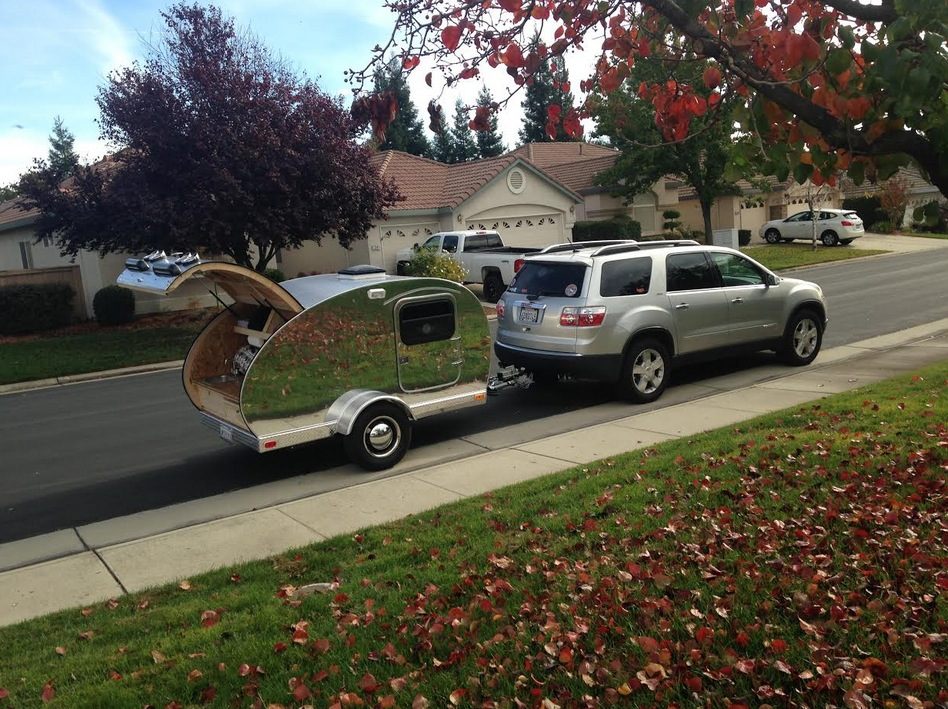
One of our readers, Jean-René Rodrigue, wanted to share his homemade micro camper with you.
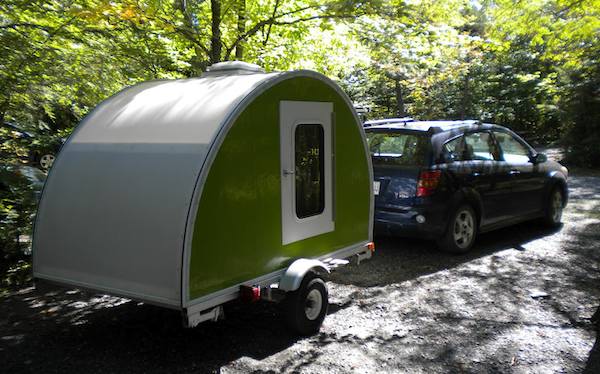
It’s a custom built teardrop trailer designed to be 8′ in length, 5′ in width, and 5′ in height on the interior.
Outside it’s length is actually 11′ 8″ and it’s overall height is 6′ 6″.
It weighs an estimated 750 lbs and has a 2,000 lbs axle on it for support.
The flooring was built using fir plywood. The walls are a composite material made out of epoxy-fiberglass and polystyrene foam.
When he added the roof Jean-René went with ultra high molecular weight polyethylene plastic. Interesting!

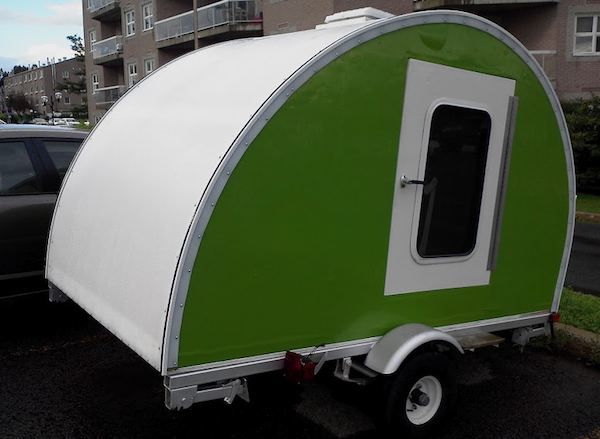
The trailer framing is all welded steel and as you’ll see, he painted it a really cool lime green color. It’s got a nice shine to it.
Jean-René added a 4″ thick queen size foam mattress.
He brings along plastic containers and an electric cooler to store food and other camping equipment.
Why would you want to build your own micro camper teardrop trailer?
Here are the reasons that Jean-René did it, and it makes a heck of a lot of sense.
- Cheap to tow because they’re easy on gas and you can pull it with a car
- Inexpensive to build or buy
- Small enough to go through remote roads
- Light enough to be pulled by 4-cylinder vehicles
- Just big enough to sleep two
- So much better than a tent as they protect you from the elements and save you set up time
How to create your own trailer
I was impressed to find that Jean-René designed and created his own trailer.
He made the 5′ x 8′ trailer out of steel square tubing and angles along with a jack stand for each corner.
Jean-René got 8″ steel wheels and a 2,000 lb axle with leaf springs.
He followed up by painting it an aluminum color to make it look nicer.
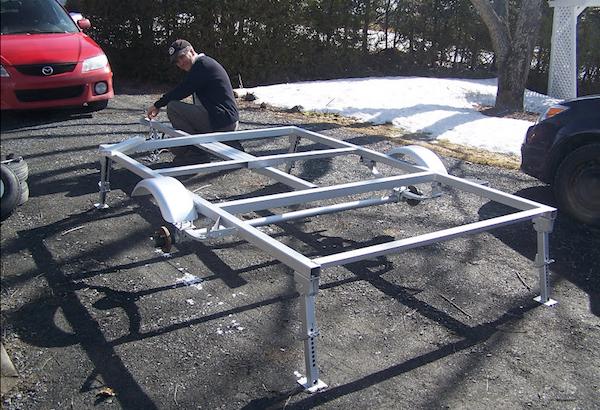


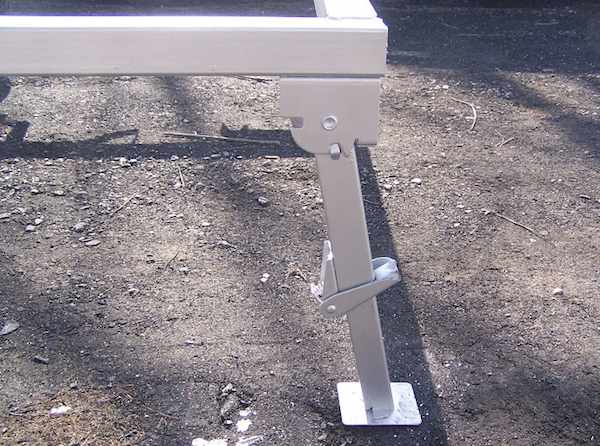
How to construct walls for your teardrop trailer
For this project, Jean-René used composite materials for the walls. He actually put this together in his apartment.
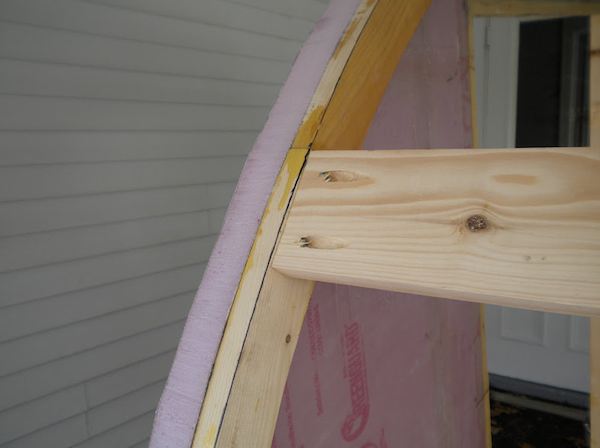
Inside there’s 1.5″ of foam sandwiched by two layers of epoxy coated fiberglass. This material is much lighter than plywood which is usually used for projects like this.
Another benefit of using this material is that if exposed to moisture, it won’t rot.
The walls are held together thanks to screwed planks at each end which you can see in the pictures below.
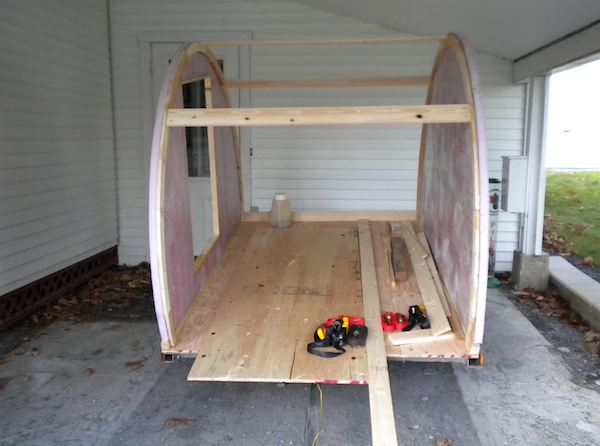
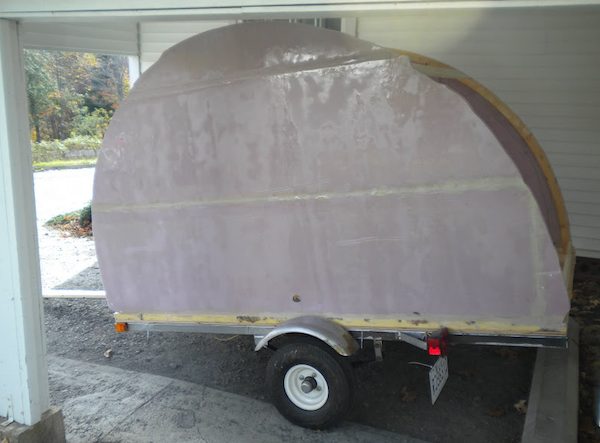

How to add a roof to your teardrop camper shell
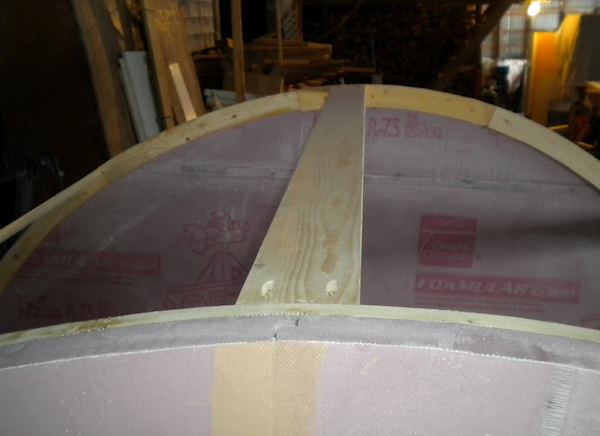
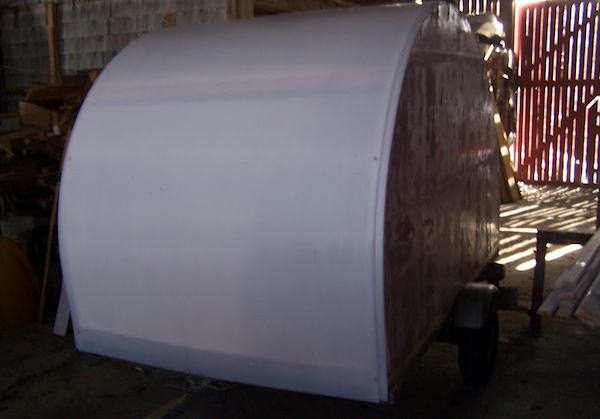
Jean-René chose ultra high molecular weight polyethylene plastic for the roof which he attached to the edges of the wall with stainless-steel screws.
This material is great for resisting cold temperatures and it’s very flexible and is less likely to dent, ding, or kink. It’s also lightweight compared to plywood.
Nothing really sticks to this material so it can’t be painted but this also means that bug splatter won’t stick either.

Adding necessary accessories for your home built micro camper
If you’re building your own micro camper or teardrop trailer, you’ll need:
- an entrance
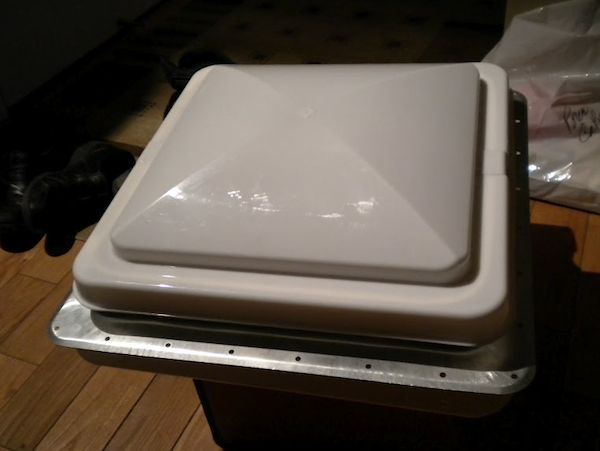
- ventilation
- a window
- jack stand
- heat
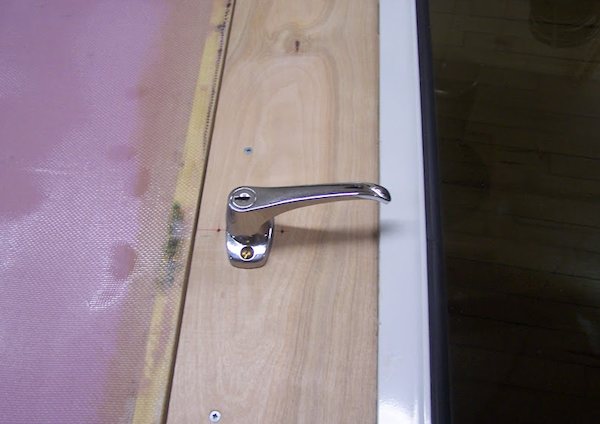
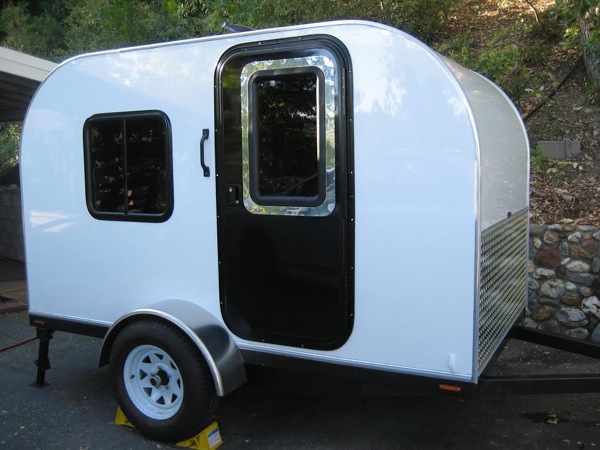
Jene-René built his own door with a window and door latch that he ordered. See below.

Painting your teardrop trailer after construction
To paint the micro camper, Jene-René took the walls apart and used a green urethane-based paint.
He kept it white on the inside, then he put it back together and sealed everything with silicon and butyl tape so that it’s watertight. See below.

Jene-René’s Teardrop Trailer / Micro Camper Project
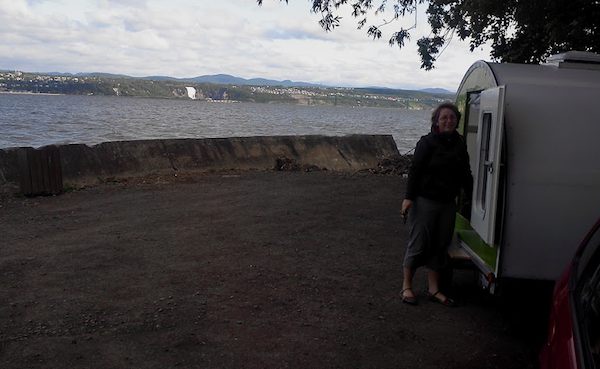
The finished product looks great and he is planning on doing it again so be sure to visit his blog.

All Photos Courtesy of Jean-René Rodrigue
If you enjoyed this post share it using the buttons below and talk about it in the comments. Thank you!
Disclosure: This post may contain affiliate links. If you purchase through one of our links, we may earn a commission at no additional cost to you.


Alex
Latest posts by Alex (see all)
- Designing for You Now and You in 15 Years - November 12, 2026
- Red Caboose Motel: Sleep Inside a Real Railroad Caboose in Lancaster County - November 11, 2026
- Family of Five Starts Over in an Off-Grid Cob Village in the Arizona Desert - November 11, 2026








Join the Conversation
61 comments